



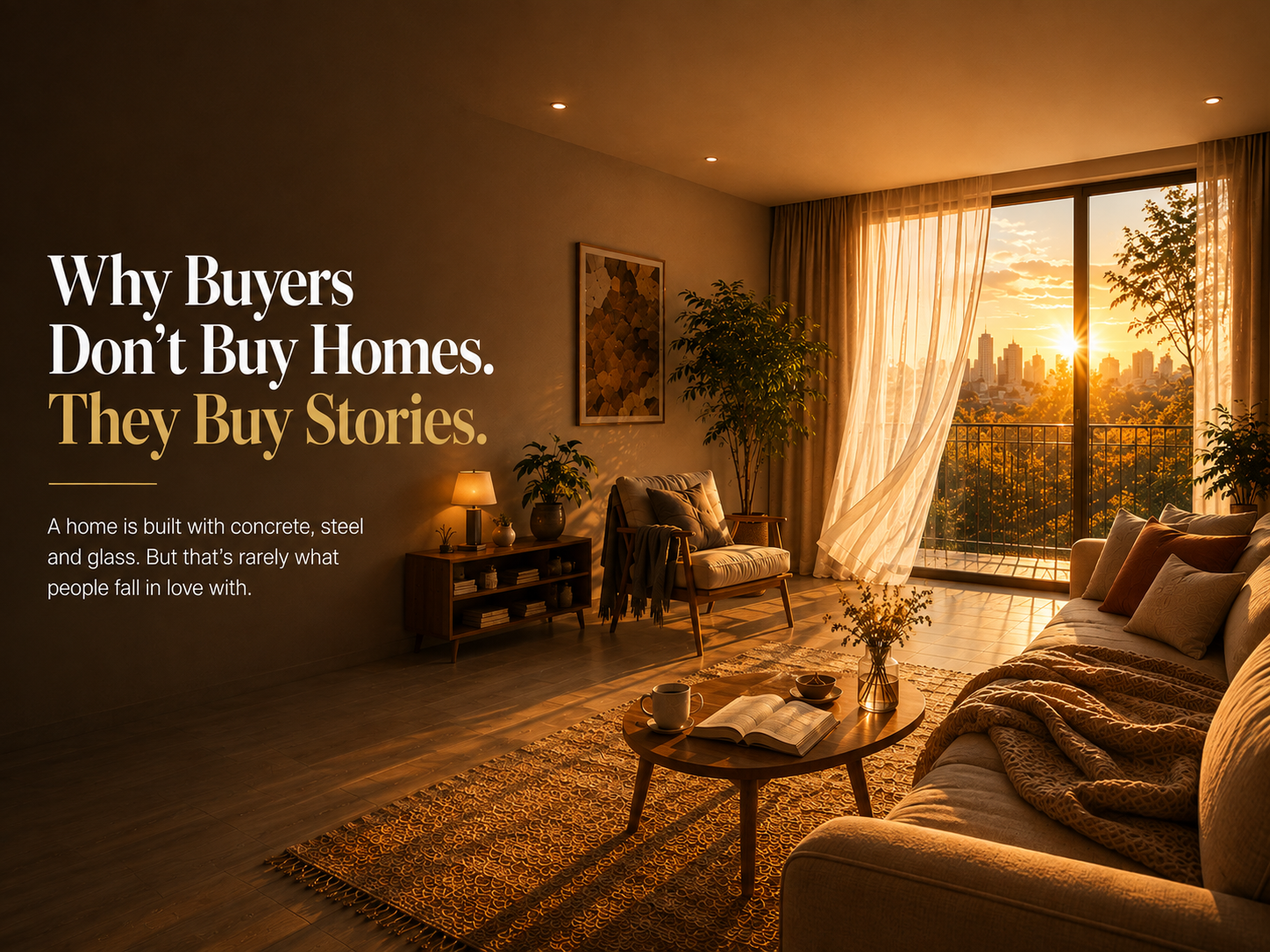
A home is built with concrete, steel and glass.
But that's rarely what people fall in love with.
Think about the last real estate campaign that stayed with you. Chances are, you don't remember the carpet area or the number of amenities. You remember how it made you feel.
Perhaps it promised a quieter life.
A stronger sense of belonging.
More time with family.
Or the freedom to live life at your own pace.
That's because people don't buy homes based on specifications alone. They buy the story those homes allow them to become a part of.
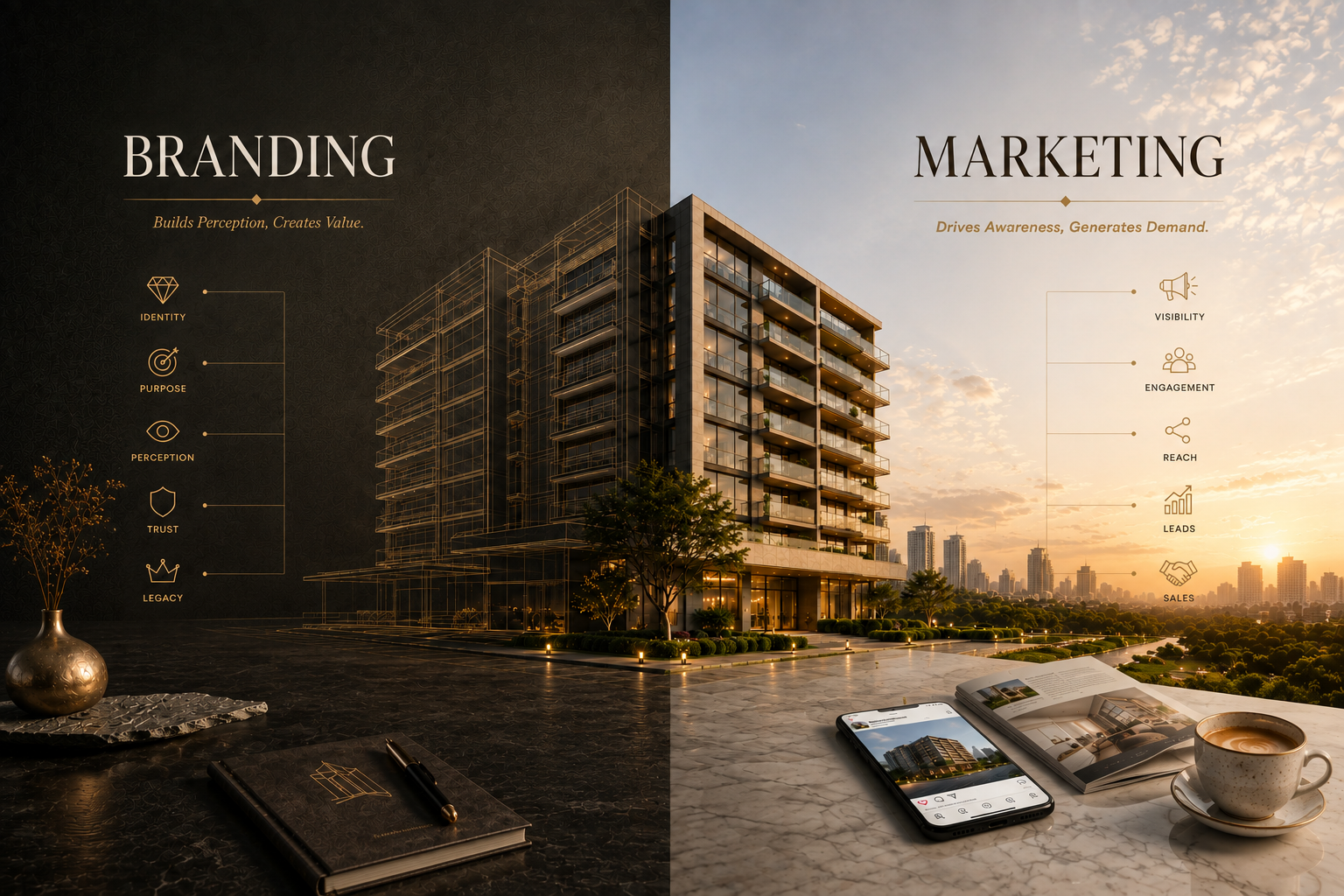
And that's where real estate branding moves beyond marketing to become something far more powerful.
People Buy Meaning Before They Buy Property
Every home represents something different to every buyer.
For a DINK (Double Income, No Kids) couple, a home can represent freedom and a lifestyle they have built for themselves. They may value well-connected locations, social spaces, work-life flexibility, entertaining areas and amenities that allow them to make the most of their time together. The home isn't simply a place to live. It's an extension of the life they're creating.
For a DISK (Double Income, Single Kid) family, the priorities can shift. The home becomes a space where a family grows together. Proximity to schools, healthcare, parks and everyday conveniences can matter as much as the home itself. Safety, community and spaces for children to learn, play and grow become part of the story they're investing in.
For a joint family, a home can mean togetherness without giving up individuality. Multiple generations may be looking for generous common spaces where everyone can come together, along with enough private space for each member of the family. Here, the value lies in creating a home that accommodates different ages, routines and ways of living under one roof.
For an investor, the meaning is more closely tied to potential. The decision may be shaped by the developer's track record, the strength of the location, infrastructure growth, rental prospects and long-term appreciation. The property represents not just an asset today, but the possibility of greater value tomorrow.
The property may be the same.
The reason for buying it is not.
That's why the most successful real estate brands don't start by asking:
"What are we selling?"
They start by asking:
"What does this property mean to the person we're speaking to?"
Because once you understand what people are really looking for, the story you tell becomes far more meaningful.
A Home Is More Than Its Features
Real estate advertisements often talk about:
- Spacious residences
- Premium amenities
- Excellent connectivity
- Clubhouses
- Landscaped gardens
- Smart home features
These are important.
But they're rarely what makes a buyer remember a project.
People don't aspire to own a clubhouse.
They aspire to the life that clubhouse represents.
A swimming pool becomes family weekends.
A sky deck becomes quiet evenings after work.
A co-working space becomes flexibility.
A landscaped garden becomes childhood memories.
A development’s features explain, but Stories inspire.
Every Great Brand Has a Big Idea
The strongest real estate developers are built around an idea that's bigger than the building itself.
That idea could be:
- Wellness
- Community
- Legacy
- Sustainability
- Urban convenience
- Nature-led living
- Design excellence
- Multigenerational living
The project simply becomes the expression of that idea.
When every campaign, experience and customer interaction reinforces the same thought, buyers begin to associate the brand with something meaningful rather than something transactional.
That's what creates lasting recall.
Stories Build Emotional Connection
Buying a home isn't just a financial decision.
It's deeply emotional.
Buyers imagine:
- Morning routines
- Family celebrations
- Children growing up
- Hosting loved ones
- Building new traditions
- Creating a life they've always wanted
Great real estate branding taps into these moments.
It doesn't exaggerate.
It doesn't overpromise.
It simply helps buyers see themselves in the story.
When that happens, a project stops feeling like a product.
It starts feeling like home.
The Best Campaigns Don't Sell. They Invite.
The most memorable campaigns don't persuade people to buy.
They invite people to imagine.
They create curiosity.
They spark aspiration.
They make buyers think:
"I can see myself living here."
That's a very different conversation from:
"This project has 40+ amenities."
One speaks to logic.
The other speaks to emotion.
The most impactful campaigns find the balance between both.
Storytelling Creates Stronger Brands
A compelling story does more than launch a project.
It creates consistency across every touchpoint.
It influences:
- Brand positioning
- Project naming
- Visual identity
- Campaign messaging
- Experience centres
- Sales conversations
- Digital communication
- Customer experience
Instead of every channel saying something different, they all reinforce the same narrative.
That's how brands become memorable.
The Think Tank's Perspective
At The Think Tank, we believe every successful real estate project begins with a story worth telling.
Not a manufactured story, but one rooted in insight, strategy and a genuine understanding of the people it's built for.
Because when a project has a clear narrative, every campaign becomes more purposeful, every experience feels more authentic and every interaction strengthens the brand.
Build More Than a Project. Build a Story People Want to Be Part Of.
The best brands aren't remembered for what they sold.
They're remembered for what they made people believe.
If you're looking to create a real estate brand that people connect with long before they make a purchase, let's tell a story that's worth investing in.





.png)

.png)
.avif)